As a follow-up to my previous post, which I admit was a long one, LG have announced the LG V50 at Mobile World Congress in Barcelona.
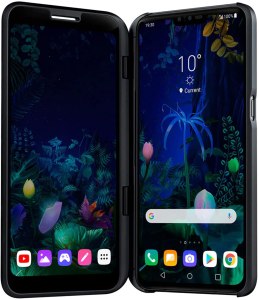
It’s their attempt at a foldable phone, which features the 2nd screen as a detachable accessory. With a gap between its screens, it’s not the most elegant of the foldable phones. Unlike the Huawei Mate X or the Samsung Galaxy Fold, however, it is likely to cost a lot less.
It sounds like the LG V50 will be like 2-in-1 ultrabooks, but smaller – where 2-in-1’s combine the functionality of a netbook/small laptop with a detachable tablet and keyboard, this LG V50 will have a 2nd detachable screen.
Razr V4?
It’s old news by now, but Motorola have also patented designs for a foldable phone – are we about to see the return of the flip phone?
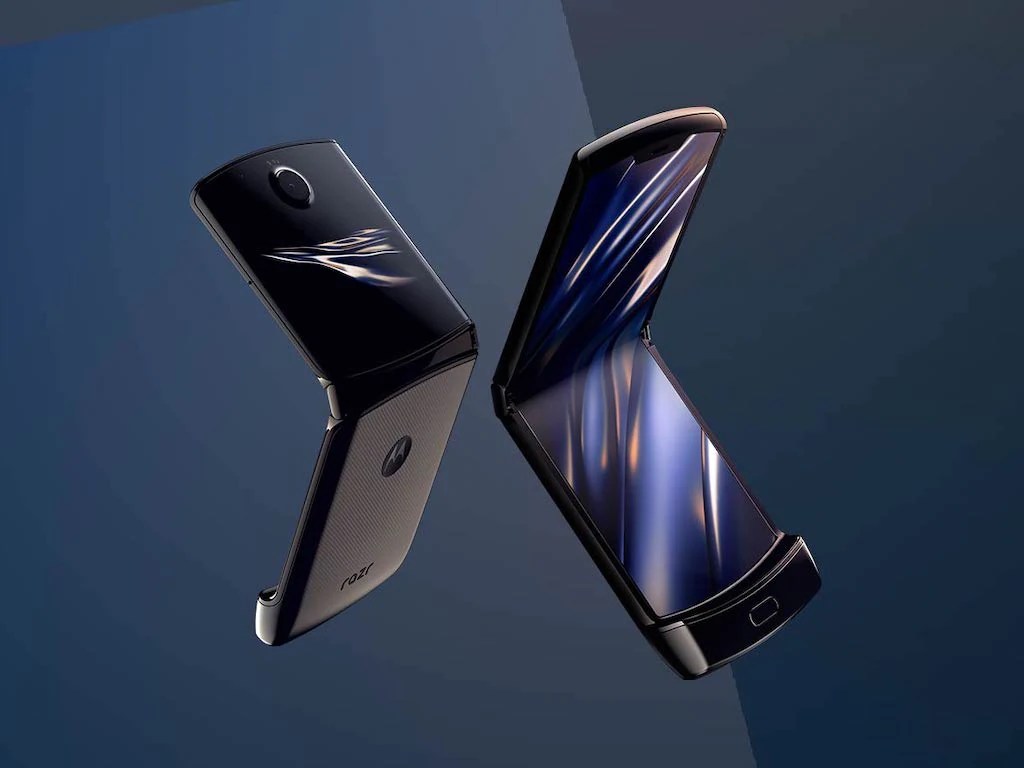
Rumours say it’ll be called the Razr V4, which would be fitting since the Razr V3 was such a successful device that it still rates as one of the best selling phones of all time, and is one of the Top 10 flip phones ever, with in excess of 140 million units sold.
However, the Razr V4 it’s likely to be a limited run of devices, which can only mean it’ll be an exclusive but also expensive device.
But these renderings differ greatly from what we’ve seen from Samsung and Huawei, who’ve gone for tablets that fold up into a large phone. What I’d like to see is foldable phones that fold up to be smaller than the 6 inch monsters we currently lug around. The Razr V4 looks like my kind of device, but if the rumours are true, it’ll cost about the same as the Mate X.
TCL’s foldable phone/watch concept
That’s where TCL come in. The Chinese tech firm, who are best known for manufacturing Blackberry and Alcatel phones, announced that they’re also working on a foldable phone, but that it will apparently bend so that it can be worn around the wrist.
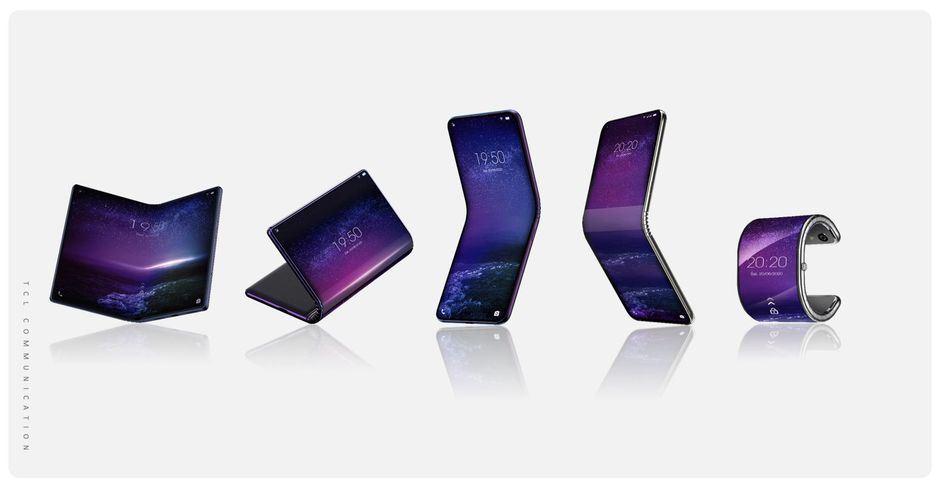
According to CNET, they’re working on 5 separate devices: “two tablets, two smartphones and a flexible phone that could curve into a smartwatch.”
From CNET:
One tablet has a display that folds inward, like a clamshell, while the other has a display on the outside, like the Royole Flexpai.
The smartphones, meanwhile, also have two variants that fold on the inside and outside, but they bend at the horizontal line, like a traditional flip phone.
The last phone appears to be tall and skinny and able to curve into a cuff around a wrist.
None share the same design as Samsung’s foldable phone.
While the Mate X and Galaxy Fold do a good job of bridging the gap between phone and tablet, effectively giving you a pocketable tablet, TCL’s phone/watch design looks even better – and on a level with the Razr V4 renderings.
Small phones were the best
Personally, I think phones were great when they were small, because they were fantastically portable. Models such as the original Nokia 3310, all the way up to the iPhone SE were great, but as phone screens have gotten bigger, so too have the devices.
3 years ago I would never have considered any phone with a display above 5 inches (eg. the Moto Z3), which is why I went for the Galaxy S7. With the bezels we had back in 2016, phones like the Moto Z3 were too huge for my hands. Even the S6 Edge was too big. The iPhone 6S Plus was huge.
Yet, here I am, in 2019 holding a Samsung Galaxy S9 Plus with a bigger screen than that, although thankfully with tinier bezels. Yes, I now enjoy a big screen as much as anyone, but until recently, I was happy with an iPhone SE-sized device (and I might yet get one as a 2nd device).
Phablets vs foldable phones
Phablets used to be the middle ground between phones and tablets, but as phones have gotten bigger, they’ve started to blur the gap even more. Remember the Nexus 7 tablet? My S9 Plus has a 6.2 inch display – just a mere 0.8 inches off the 2013 tablet. It’s not a phablet by any means – that title is reserved for the Galaxy Note 9 – but it is perilously close to being the same size as a Google Nexus tablet. Scary!
Foldable phones, such as the Mate X and Galaxy Fold, look to me like they’re going to share the middle ground with phablets: bridging the gap between a phone and a tablet. The LG V50, meanwhile, looks like it’ll offer an alternative in the form of a cheaper device with its breakaway screen.
Foldable phone = smartwatch?
But in my opinion, TCL’s design looks set to bridge an entirely different gap – between the phone and smartwatch.
I haven’t jumped onboard the smartwatch train so far, mainly due to my love of old analogue/chronograph/quartz watches, and also because (at this stage) I can’t see the point.
I’m not saying I’ll never get a smartwatch, but not right now. As a standalone device, it might tempt me… but most smartwatches at the moment are simply just companion devices for phones, and yet they cost as much as a phone, if not more!
Until recently, the Apple Watch cost more than the 128GB iPhone SE. The newest Samsung Galaxy watch costs more at £299 than the Moto G6 phone at £169 – a top-level budget phone.
Etcetera, etcetera, etcetera…
Therefore, if TCL’s foldable phone/smartwatch design comes to fruition, that could tempt me to buy it.
In fact, if the 2008 Nokia Morph concept ever made it to the market as an actual working product, I would definitely buy it.
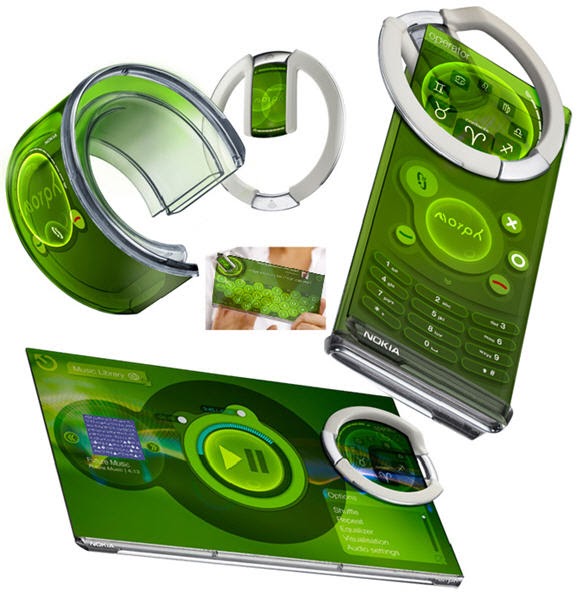
As you can see in the above concept image, its wearable technology didn’t stop at just a wristwatch. It could be a tablet, phone, watch or even an earpiece.
While that concept is still a long way into the future, with folding phones and smartwatches now in existence, the Morph (or a similar product) can’t be that far away.
But, I’m not onboard with the smartwatch at the moment – mainly due to the aforementioned costs. I love the idea of being able to fold my phone and wear it as a watch; or, go out wearing it as a watch, and when I need to use it as a phone, simply unfold and hold it up to my ear.
But for me right now, it’s not a realistic proposition.
However, everyone else could certainly learn something from TCL and Nokia…
– Chris JK.
 KPH tech blog
Leave a comment